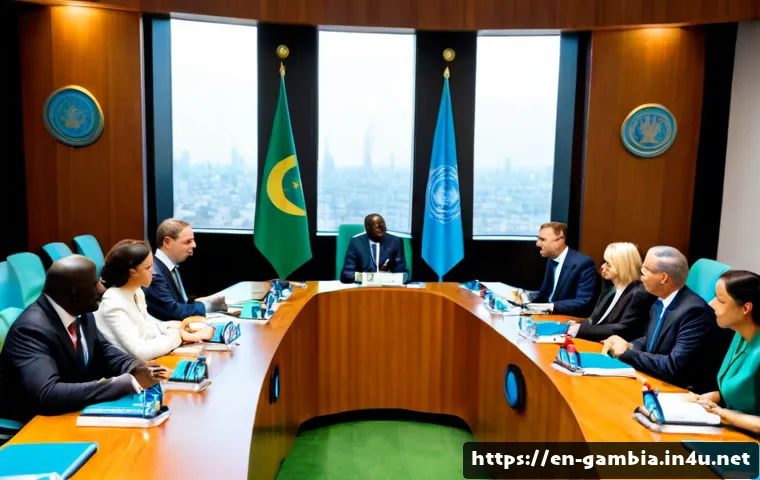
The Gambia has been a United Nations member since 21 September 1965, participating in General Assembly diplomacy while working with UN bodies on national development priorities.
Its UN relationship also includes a major international legal action: the case it initiated against Myanmar at the International Court of Justice. For most readers, free UN and ICJ materials provide a sound starting point for basic research.
More specialized policy research tools, project-monitoring services, or development consulting can be useful when decisions depend on current implementation data, funding details, or verified legal updates.
The key is to distinguish membership activity, agency programmes, treaty-based obligations, and court proceedings rather than treating them as one type of UN engagement.
This guide explains those differences and shows how to assess related information carefully.
At a Glance
- Diplomacy: The Gambia has participated in the UN General Assembly as a member state since 1965.
- Development: Its engagement with UN agencies and programmes includes priorities such as health, education, food security, gender equality, governance, and climate resilience.
- International law: The Gambia brought proceedings against Myanmar at the International Court of Justice in 2019 under the Genocide Convention.
| Area of engagement | What it involves | Best source type to check |
|---|---|---|
| General Assembly participation | Membership, multilateral diplomacy, and voting on General Assembly resolutions | Official UN membership and resolution records |
| UN country programmes | Development cooperation connected to national priorities and the Sustainable Development Goals | Current agency programme documents and project updates |
| ICJ litigation | Legal proceedings between states under international law | Latest ICJ case records, orders, and judgments |
What Gambia’s UN Engagement Means in Practice
Three Quick Points: Member-State Diplomacy, Development Cooperation, and International Legal Action
The Gambia’s relationship with the United Nations is not limited to one institution or one policy field. UN membership gives the country a place in the General Assembly and the ability to vote on General Assembly resolutions. Development cooperation involves engagement with UN agencies and programmes on national priorities. Legal advocacy can take place through international courts, as seen in the proceedings The Gambia initiated against Myanmar at the ICJ.
These categories should be kept separate. A General Assembly vote is not the same as a UN-supported development project, and neither is the same as litigation before the International Court of Justice.
Why UN Participation Matters for a Small West African State
For The Gambia, UN participation provides a multilateral setting for diplomacy, development coordination, and discussion of shared international challenges. Its work with UN bodies is connected to the Sustainable Development Goals and national development planning. In practice, UN-related activity may involve government ministries, civil society organizations, development partners, and international organizations.
A useful caution is that participation does not by itself prove a particular policy outcome. Readers should look for the relevant mandate, programme document, implementation update, or official record before drawing conclusions.
Key Areas of Engagement: Diplomacy, Development, and International Law
General Assembly Participation and Multilateral Diplomacy
The Gambia became a UN member on 21 September 1965, following independence earlier that year. As a member state, it participates in the UN General Assembly and can vote on General Assembly resolutions. This is the core institutional meaning of UN membership.
When reviewing a claimed voting position, use the record for the specific resolution. Do not assume a current position from older statements, broad regional patterns, or commentary about a different issue.
UN-Supported Development Priorities and Sustainable Development Goals
The Gambia engages with UN agencies and programmes on areas that include health, education, food security, gender equality, governance, and climate resilience. These activities are connected to the Sustainable Development Goals and national development planning.
For development-sector readers, it is important to separate a broad priority from an active programme. A policy statement may identify climate resilience or education as a priority, but current project scope, funding, partners, and implementation status can change by budget cycle. For project planning, check the latest country programme materials and the specific agency or partner responsible for delivery.
The Myanmar Case at the International Court of Justice
In 2019, The Gambia initiated proceedings against Myanmar at the International Court of Justice under the Genocide Convention. In January 2020, the Court indicated provisional measures in the case. In July 2022, the Court rejected Myanmar’s preliminary objections, allowing the case to proceed to the merits stage.
Provisional measures are not a final judgment on the merits. The current procedural status, timeline, and final outcome should be checked directly against the latest ICJ records. Legal research should also distinguish between the Court’s orders, preliminary-objection decisions, written materials, and any later merits-stage developments.
Comparing UN Roles and Their Practical Value
Membership Rights Versus UN Agency Support
UN membership concerns the rights and responsibilities of a state within the organization, including General Assembly participation. UN agency support concerns programmes, technical cooperation, and development work that may operate through different mandates and planning cycles.
For a class paper or basic briefing, official public documents may be enough. For a proposal, donor discussion, or operational decision, readers may need more current project-level information than a general UN overview can provide.
Legal Advocacy Versus Development Programme Delivery
Legal advocacy is focused on international legal process and state responsibility. Development programme delivery is focused on practical activity in areas such as health, education, governance, or food security. Both can be part of a country’s wider UN engagement, but they use different evidence and should be evaluated differently.
For example, an ICJ case update should come from court materials, while a programme-performance question requires implementation evidence. Avoid using a diplomatic announcement as proof that a project achieved its intended results.
When Policy Research Platforms or Development Consulting May Add Value
Specialist policy research platforms, international project monitoring services, and development consulting support may be useful when work requires comparison across agencies, current programme mapping, stakeholder analysis, or structured due diligence. The value is usually in organization, verification, and context rather than replacing primary sources.
Before selecting a service, ask whether it identifies its source dates, methodology, geographic coverage, and update process. Currentness and traceability matter more than polished summaries.
How to Research UN Activity Without Misreading the Evidence
Check Publication Dates, Mandate, Funding Cycle, and Implementation Status

Start with four questions: When was the document published? Which UN body issued it? Does it describe a plan, an approved programme, or completed work? Is it tied to a funding or planning cycle that may have changed?
A recent country page may be helpful for orientation, but it may not answer whether a particular activity is active, funded, completed, or independently assessed. For time-sensitive research, consult the newest available official material.
Separate Announcements, Commitments, and Independently Measured Outcomes
An announcement signals intent. A commitment describes what participants say they will do. An outcome claim requires evidence that activity occurred and produced a measurable result. These are different levels of proof.
When reading project summaries, look for clear language on status and evidence. If a document does not identify the implementation period or the basis for an outcome claim, treat it as background rather than final proof.
Common Mistakes When Using UN Resolutions, Reports, or Project Documents
Common errors include treating a General Assembly resolution as a binding domestic policy result, using an old programme document as if it were current, and assuming that a country’s broad development priority confirms a specific project outcome. Another mistake is relying on secondary commentary without checking the underlying UN or ICJ record.
Different Reader Needs: Study, Policy Work, and Development Projects
For Students and General Readers
Begin with the membership date, the General Assembly role, the development areas of engagement, and the basic ICJ timeline. Official UN and ICJ materials are generally the most appropriate starting point for factual background.
For NGOs and Programme Teams
Focus on current country programme documents, relevant agency mandates, implementation partners, and the status of project activity. A broad UN development reference is useful context, but operational planning needs more specific and current documentation.
For Researchers, Grant Planners, and Policy Analysts
Use a layered approach: primary UN or ICJ records for formal status, current programme documents for implementation context, and specialist policy intelligence or monitoring tools when the task requires cross-source comparison. Consulting support can be appropriate where stakeholder mapping, evidence review, or project due diligence is needed.
Selection Criteria and Comparison Summary
Choose the Right Source for Diplomatic History, Legal Developments, or Project Data
For diplomatic history: use official UN membership and General Assembly records. For legal developments: use the latest ICJ case page and court documents. For project data: use current programme materials from the relevant UN agency or implementing partner.
Questions to Ask Before Paying for Policy Intelligence, Monitoring, or Advisory Services
Ask whether the service covers The Gambia specifically, whether it identifies primary sources, how often it is updated, and whether it distinguishes planned work from verified implementation. Also ask whether its output fits your real need: desk research, project monitoring, legal tracking, or development strategy.
A Concise Checklist for Reliable Decision-Making
Check the source authority, publication date, institutional mandate, programme period, and evidence level. Confirm whether a claim is about a diplomatic position, a development commitment, an active project, or a legal proceeding. For detailed requirements, review the official guidance and service conditions on the relevant provider’s page.
Closing Thoughts
The Gambia’s UN engagement combines member-state diplomacy, development cooperation, and international legal action. Each area has a different purpose and requires different evidence. The most reliable research begins with official records, then adds specialist tools only when the assignment or decision requires deeper, current, or comparative analysis. Careful source selection is especially important when project status, funding, voting records, or legal developments may have changed.
Useful Information to Keep in Mind
1. The Gambia joined the United Nations on 21 September 1965.
2. General Assembly participation and UN agency programming are different forms of engagement.
3. The ICJ case against Myanmar should be followed through current court records.
4. Development priorities do not automatically confirm the status or effectiveness of a specific project.
Important Notes
UN funding amounts, active country programmes, agency priorities, and project implementation details may change over time. The Gambia’s position on any specific resolution should be verified through the relevant UN record. The present status and final outcome of the ICJ case also require confirmation from the latest court materials.
Frequently Asked Questions
Q1. When did The Gambia join the United Nations?
A1. The Gambia became a member of the United Nations on 21 September 1965, following independence earlier that year.
Q2. What is The Gambia’s role in the ICJ case against Myanmar?
A2. The Gambia initiated proceedings against Myanmar at the International Court of Justice in 2019 under the Genocide Convention. The Court indicated provisional measures in January 2020 and rejected Myanmar’s preliminary objections in July 2022, allowing the case to proceed to the merits stage. Check current ICJ records for later developments.
Q3. Are UN reports enough for development project planning, or is specialist research support sometimes useful?
A3. Official UN reports can be sufficient for introductory research and high-level context. Specialist research support, monitoring tools, or development consulting may be useful when planning depends on current programme status, cross-agency comparisons, implementation evidence, or structured policy due diligence.